
A Dystopia of Pleasure
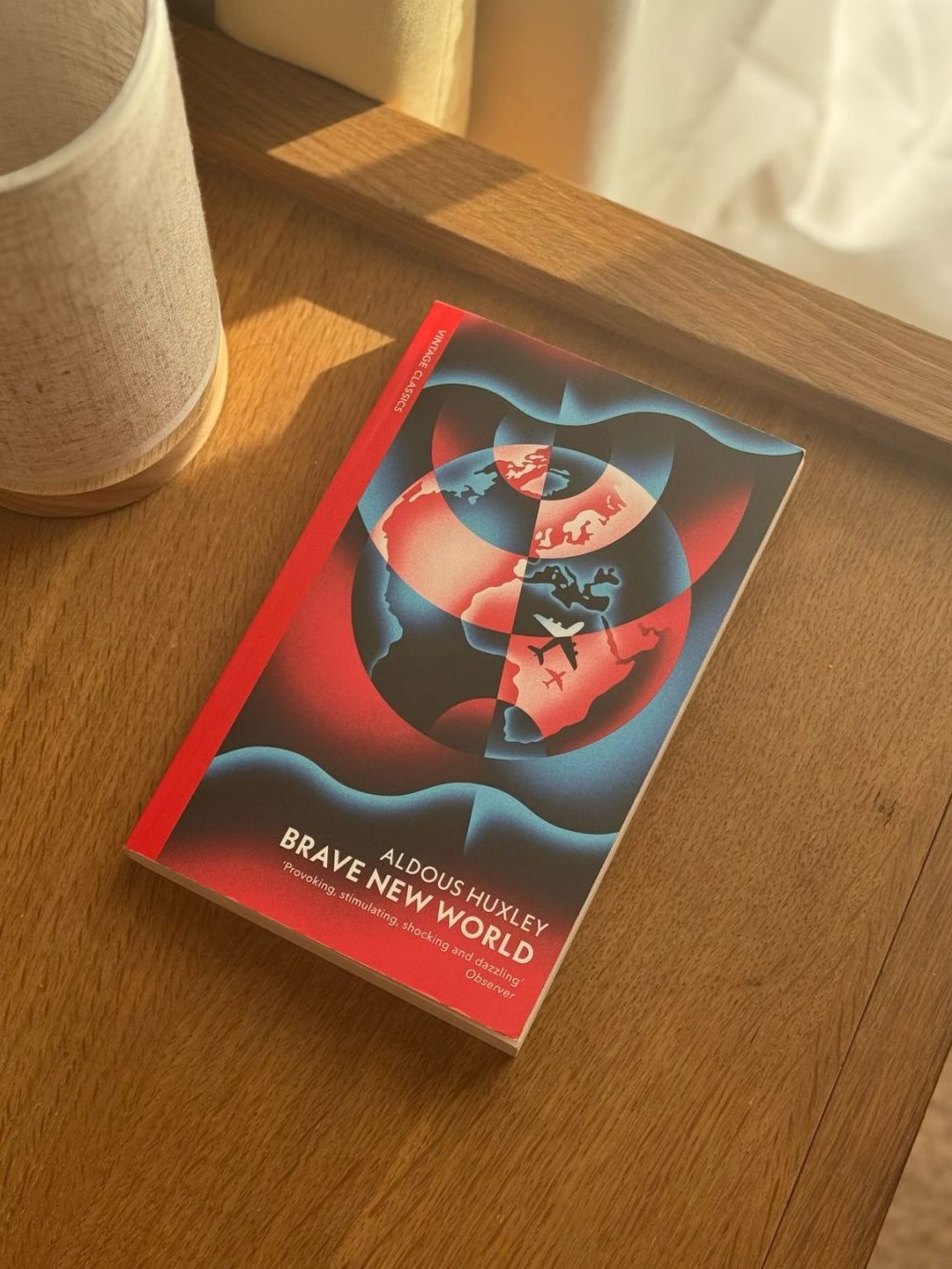
Dystopian novels often function as cautionary tales, portraying an elite ruling class with absolute and unchecked power over society. Perhaps the most famous of these is Orwell’s 1984, which warns against oppression through fear and surveillance. Though often overshadowed by 1984, Brave New World by Aldous Huxley remains increasingly relevant today, portraying a dystopia where pleasure, indulgence, and complacency serve as tools of control rather than fear and violence.
When I first read Brave New World, it immediately became one of my favourite novels. Huxley’s world is incredibly dense and thought-provoking, exploring themes of consumerism, individualism, death, and the roles of art and technology. The World State, the all-powerful government in Brave New World, maintains control over society through pleasure. In this piece, I will explore the role of soma—the fictional drug that ensures the World State’s dominance—and examine its parallels in our own world so that we can lead more purposeful lives.

What is Soma in Brave New World?
Soma is a drug ubiquitous in Brave New World which, when taken, induces an unrivalled feeling of ecstasy, comparable to the euphoria derived from taking opioids – without the negative effects. Small doses are used by the characters to suppress and escape negative emotions. Anxiety, stress, grief, loneliness, guilt are all ‘cured’ by soma, almost instantaneously. Suffering is no longer inevitable. Why would you ever feel sadness, when soma can bring you back to bliss?
“One cubic centimetre cures ten gloomy sentiments” is often parroted by the characters, having been taught this phrase from birth. All negative emotions are therefore be treated equally as ailments. In the same way that headaches are easily treated by painkillers like paracetamol or ibuprofen, all negative emotions can be treated with soma. Instead of working through emotions, the citizens of the World State are taught to escape them. These escapes can last as long as one desires, and larger doses of the drug sends the user a ‘soma holiday’, where they drift for days on end in an artificial euphoric state. Negative emotions are a solved problem, and the solution is soma. Is this genuine happiness?

Not only is soma used to cure unsavoury emotions, it is also used to distract the citizens from reality. When a character becomes skeptical and starts asking deeper and more comprehensive questions, soma acts as a distraction. If they question the constant pursuit of pleasure, yearn for deeper emotional connection, or are curious about the structure of society, they are told that “a gramme is better than a damn”. Once you take soma, you no longer question the world around you, you just exist and follow pleasure. Dissatisfaction is therefore also cured by soma and through this, the status quo remains indefinitely. How can a society advance if any and all dissatisfaction can be quashed?
Soma and Social Media: Distractions that Keep Us Numb
For contemporary readers, Brave New World invites us to question what our modern equivalent of soma might be. There are the obvious answers of hard drugs- amphetamines, opioids, fentanyl- which, like the novel, literally puts individuals in a euphoric state. These incredibly addictive substances can easily run rampant and have caused major societal problems in places like the United States. Modern soma could also be legal drugs, like alcohol and nicotine. These are more widely accepted substances, but drugs nonetheless with countless deleterious downsides.

A more subtle example of a modern-day soma is social media, not a drug in the traditional sense, but performs a similar societal function to soma. Much like soma, social media distracts us from thinking too deeply. Our free time is engulfed, often unknowingly, by the constant act of swiping to reveal that next short-form video, where each scroll provides an escape from reality. If we consider social media as our modern-day soma, it can be viewed from a unique and helpful perspective. Social media then becomes the ‘drug’ that we use to fill spare time in our days, escape negative emotions, and ultimately escape reality. Always having something to distract us from any smidge of boredom prevents us from having deep thoughts. We often find ourselves filling pockets of time throughout the day with social media. When waiting for the train, the elevator, or even walking, with spare few seconds, we reach into our pockets to take our phones out to scroll social media. It is so difficult now to experience a quiet moment without one’s phone.
It is common to lose track of time when scrolling on Instagram, Facebook, TikTok, or any other social media site. If we suddenly close the app, we are often completely unable to recall what we just watched. Personally, I find this so worrying as it feels like my brain is deteriorating. The reality is so dire that a phenomenon known as phantom vibrations are commonly experienced, primarily in individuals who frequently have their smartphone close by. This is the false feeling of a smartphone vibrating in one’s pocket, thought to be caused by a combination of sensory misinterpretation, habitual phone use, and the brain’s tendency to anticipate notifications.
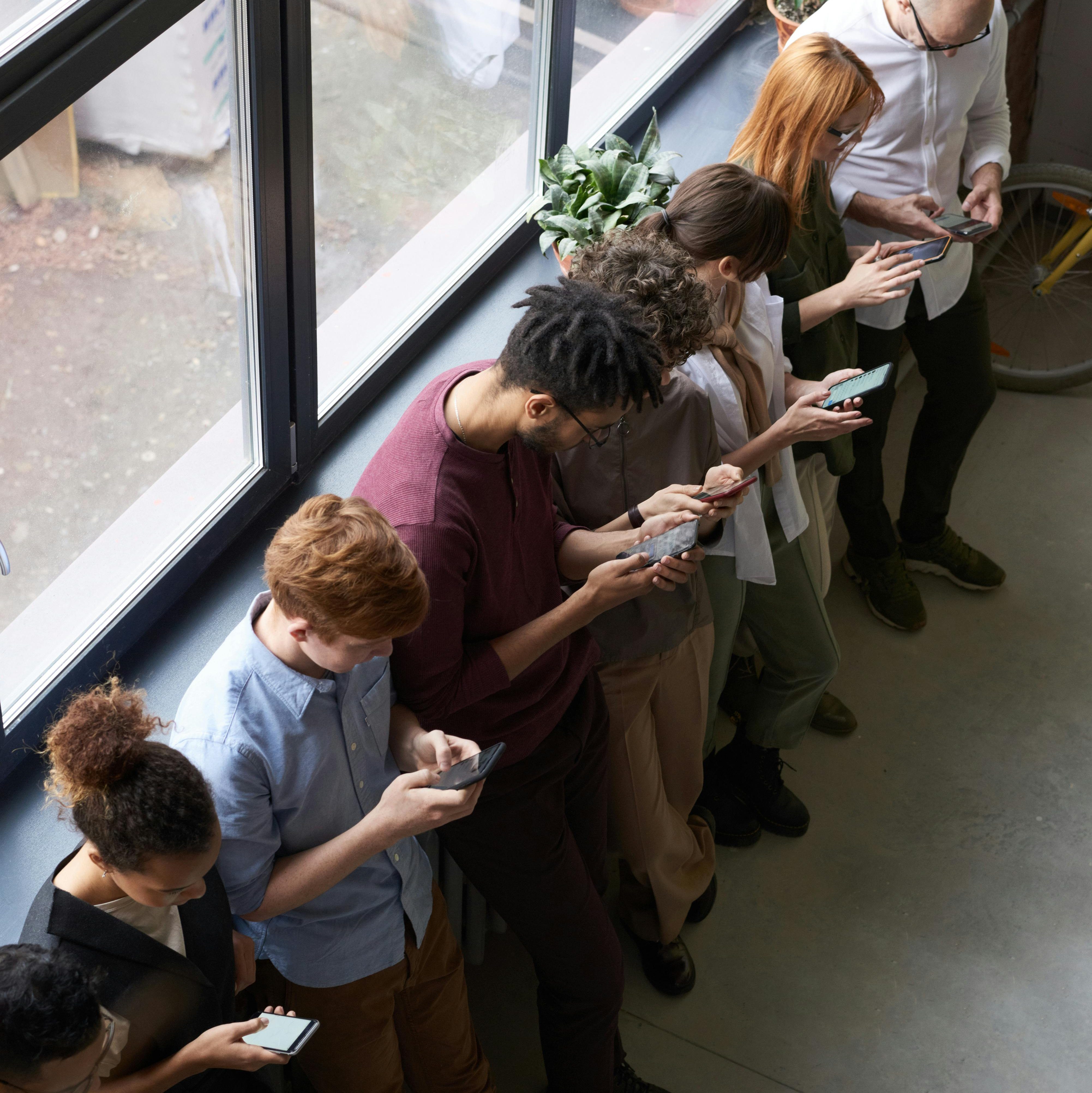
This instinctive behaviour to constantly check our phones is reminiscent of the level of control we have handed over to tech companies. In recent years, the term ‘attention economy’ has become popular to explain efforts by tech companies to commodify of our attention and keep us on their platforms. Our attention is then sold to advertisers for enormous amounts of money. These companies have meticulously designed every aspect of their apps in an effort to keep us scrolling, binge-watching, and consuming. No longer do we need to hand over our money directly to companies, we instead surrender our attention.
In a world where attention is a currency, we have to guard it closely in the same way that we might guard our wallets from thieves. One way to do this is by having a better relationship with social media, one of our biggest attention sinks.
Reject Soma, Lead a More Meaningful Life
I have tried quitting social media before, and have always gone back to it because I find the messaging aspect and ability to keep up with friends through their posts and stories appealing. My problem with social media is the infinite scroll, like with TikToks and Instagram reels. Once I have caught up with my friends’ posts and commented sufficiently to remain a part of their lives, I find myself down a rabbit hole of videos algorithmically perfected to ensnare me on the app for as long as possible. It is as if Instagram and TikTok, through their sophisticated algorithm, personally designed a soma for each and every one of us. A soma to keep us mindlessly scrolling through each short-form video, digesting as many ads as possible. In this way, we live in a Huxleyan society where we are controlled not by fear or violence, but by the pleasure.
The more I internalised this, the more dedicated I became to having a healthier relationship with social media. I no longer allow these tech companies to hijack my psychology to keep me on their platforms to show me as many ads as possible, in the same way that I refuse to let tobacco companies get me addicted to cigarettes. We should be treating social media as a vice, where we must control it before it controls us.
The next question is: How do I control my social media usage?
I personally have not found it useful to outright delete my social media apps because I still enjoy keeping up with friends. However, I found it more useful to reduce the appeal of social media apps themselves through the following strategies.
- Deleting apps from my phone and only using social media on my laptop
- Making social media websites greyscale to reduce their appeal
- Using third-party web extensions to remove the most distracting sections of the social media web pages
- Carrying a book with me when outside on public transport to avoid reaching into my pocket and scrolling
Since implementing these changes, I have found myself with more time and energy for things that excite and energise me. As of now, I enjoy reading a great deal, and have no regrets reducing my social media usage.
I will post more about how exactly to implement each of these strategies in due course, so stay tuned for email updates!
Having free time is a luxury. We are often incredibly tired when we get back from work. We could so easily turn on the TV to watch Netflix, or roll into bed and start scrolling short-form videos. In the short term, this may be relaxing, but are you really happy with the time you spent? Did you choose to start scrolling your TikTok feed or turn on Netflix, or are they just the easiest ways to kill time?
I came to the conclusion that personally, my social media usage was often purely instinctual. I didn’t need to think about pulling my phone out to start scrolling short-form videos. Upon reflection, this seemed like a large problem and through consistent effort, thankfully my own social media usage has decreased, although l still struggle with spending copious amounts of time on Youtube and news sites. There is still work to be done to live more intentionally, but often the first step is the most difficult.
Conclusion: Choosing Meaning
In Brave New World, soma distracts the populous from engaging with reality. Similarly, social media in the modern world can be thought of as our soma. We have the option to reject this modern-day soma and instead spend our time more intentionally. We may choose to read, have conversations with loved ones, or simply dwell in silence. It is astounding how much more free time one has when they make a conscious effort to unplug. Rejecting social media does not mean rejecting pleasure outright, it means choosing deeper, more meaningful forms of fulfilment, free from the influence of Big Tech’s algorithms.
 Mico Talks
Leave a comment