
Why read with artificial intelligence?
Have you ever felt lost when reading a book? The language may be complex, the plot might not make sense, or you might need historic context to appreciate the work. One of the best use-cases for Artificial Intelligence (AI) is reading assistance, where it has been amazing in providing depth and fostering my appreciation for works of literature. In this article, I will walk you through how to use AI to elevate your own reading experience.
Reading alongside an AI assistant works well when reading books with:
- a complex plot
- extensive historical context
- unfamiliar vocabulary
- references to other works
- considerable social and philosophical commentary
Example Use: Moby Dick
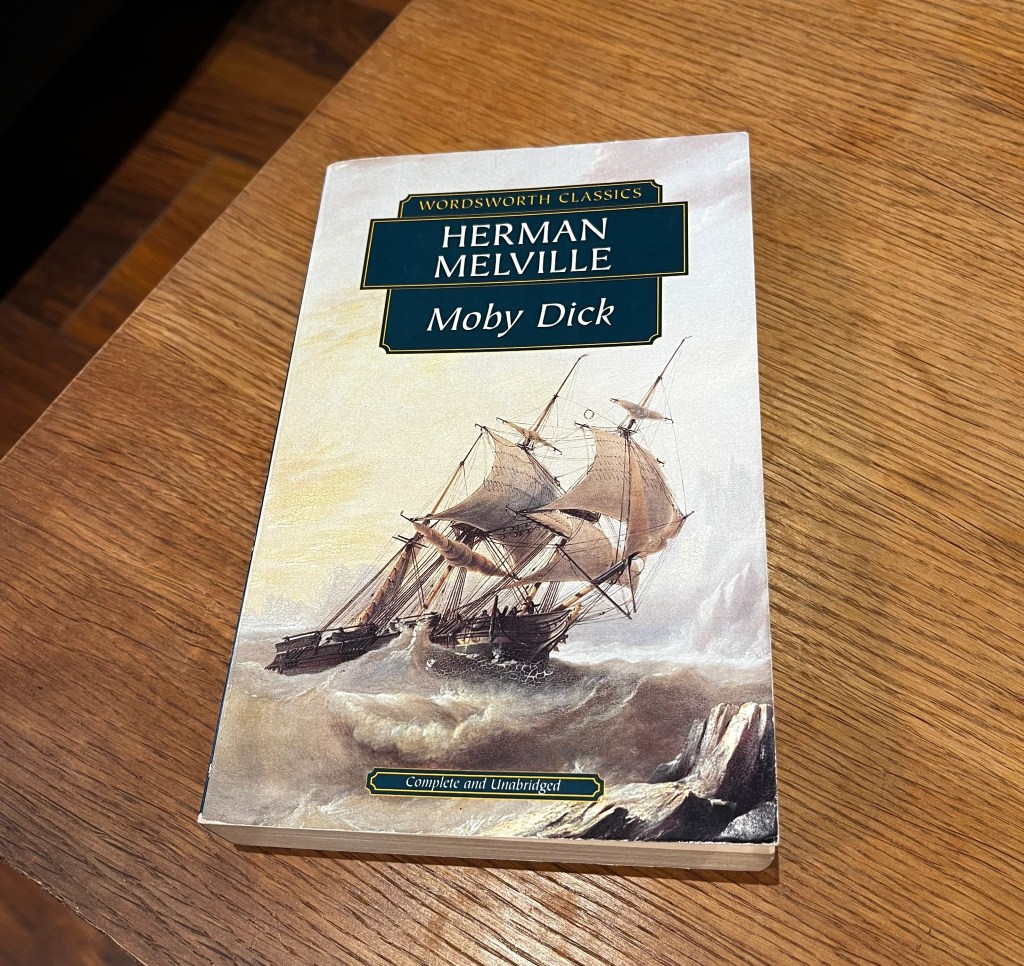
Let’s use the example of Moby Dick by Herman Melville, a book I’ve been reading recently. I personally use ChatGPT because I find it to be through and comprehensive, but the following method works with any Large Language Model (LLM) you decide to use. Other examples of LLMs you could use include Llama, Gemini, Claude, and many more.
Historical Context
Moby Dick is a notoriously difficult read because of its dense language, voluminous Biblical and mythological references, philosophical digressions, and societal commentary. This makes it a excellent example of a book to read with AI assistance.
Having been published in 1851, the book was written during a time period hugely different to ours, so learning the historical context is vital to gaining a full understanding. This is one of the first things I did.
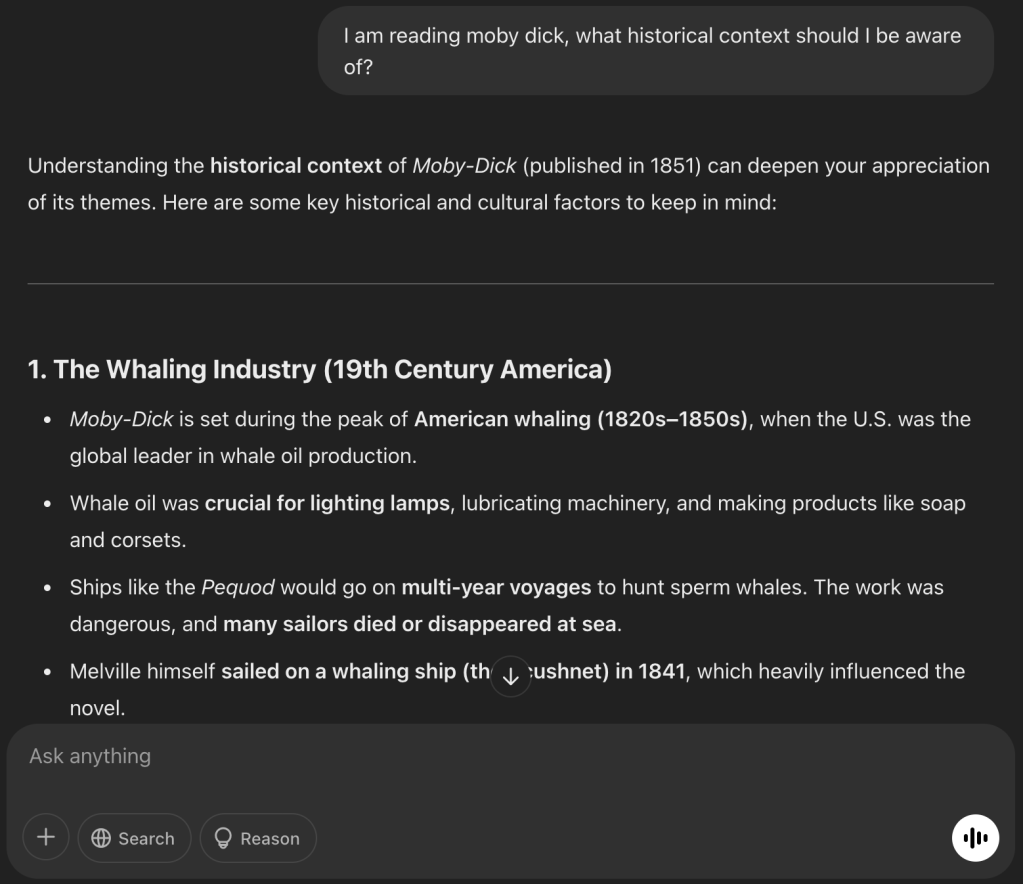
Example prompt: I am reading [book title], what historical context should I be aware of?
Chapter Recap and Preparation
It might also be useful, when reading the novel, to have a recap of the previous chapters (if you have the memory of a goldfish, like me). I also use AI to prepare for upcoming chapters, allowing me to better appreciate the novel because I avoid missing important symbols and allegories that otherwise might evade my attention. You might also ask which chapters are most important to absorb, which drive the plot, and which are more peripheral.
By doing this, I better appreciate the themes involved because I have more awareness of what to expect. For example, at the start of Moby Dick, Melville discusses racial tension, and towards the middle, he shifts to a discussion about fate and free will.
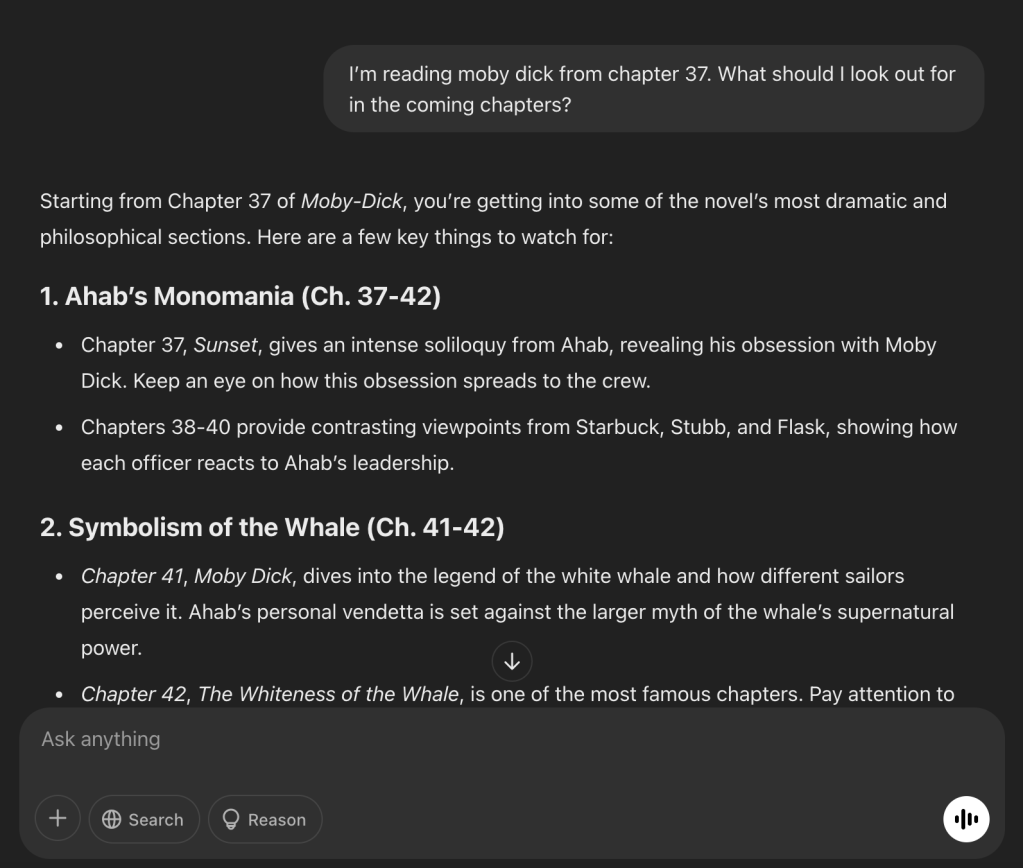
Example prompt: I am reading [book title] from chapter [chapter number/title]. What should I look out for in the coming chapters?
Thematic Discussion
In books as thematically dense as Moby Dick, it is easy to go down the rabbit hole of different mythologies, philosophies, or biblical stories. Fair warning that these tangents may halve your reading speed, but the process is much more enjoyable.
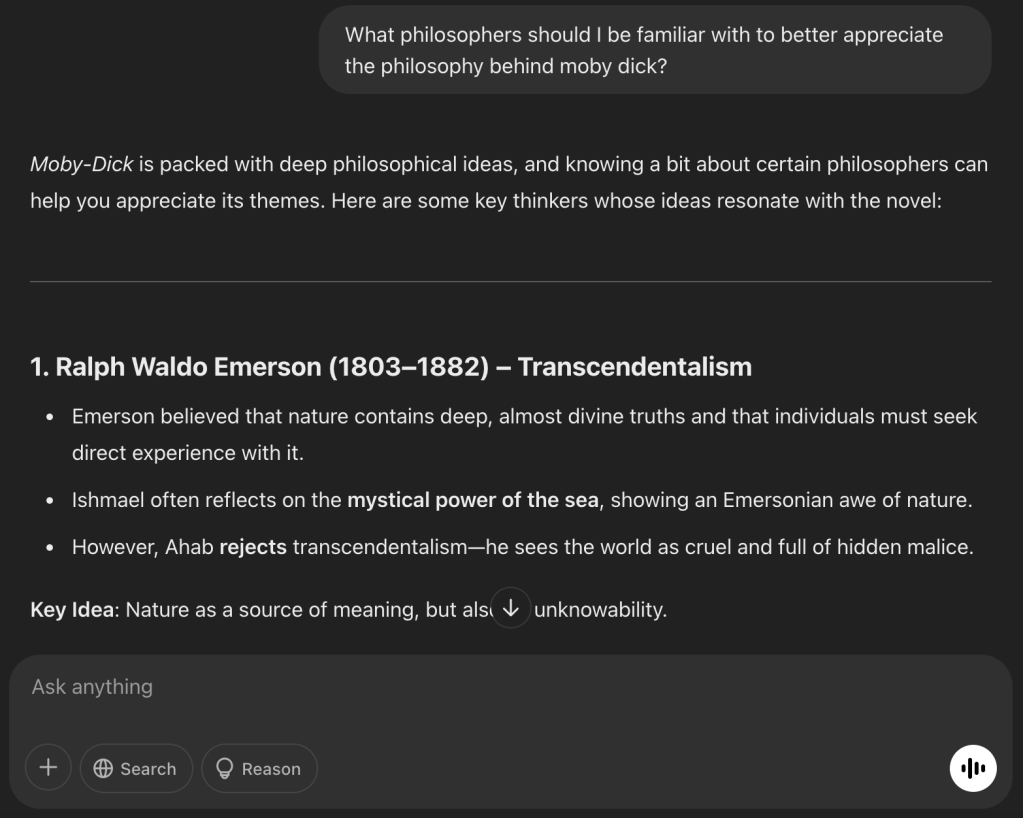
Example prompt: I am reading [book title], what philosophy should I be aware of?
Language
If you come across an unfamiliar word, you can use AI to enhance your vocabulary. This may involve asking AI to explain where a word originates (etymology) and how to remember it. You could even add it to a collection of vocabulary flashcards so you can test yourself and retain your newfound vocabulary.
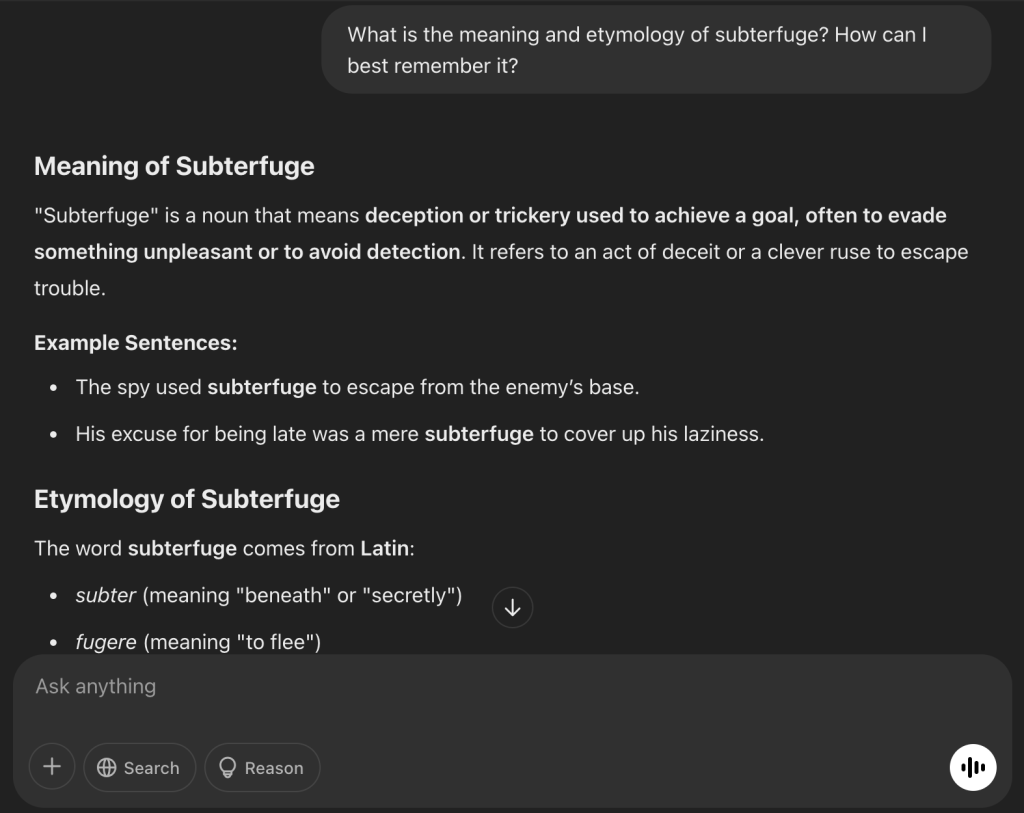
Example prompt: What is the meaning and etymology of [word]? How can I remember it?
Pitfalls
The main pitfall when using AI assistance when reading is you are using your device, which is a real distraction. After reading a page, you may find yourself unlocking your phone and scrolling TikTok or Instagram mindlessly. To avoid these distractions, I suggest using Do Not Disturb religiously to silence notifications whenever reading.
Another downside is this process considerably reduces reading speed and disrupts the flow of reading, because you might find yourself using AI to learn about something tangential to the story. I personally do not view this as a downside because I prioritise reading comprehensively over reading quickly. Moreover, it is important to form your own opinions when reading a work of literature. You can use the AI to gain knowledge, context, and understanding, but avoid letting the AI tell you what to think. One of the greatest pleasures of reading is being able to form your own opinions, and we should retain that.
Conclusion
There has been no shortage of amazing use-cases for AI in recent years, with revolutionary research papers and products being published seemingly weekly. Alongside our phones, we have access to (almost) all of humanity’s collective knowledge, but we tend to use the internet unwisely. Instead of learning, we preoccupy ourselves with low-quality short-form content where after swiping away, we completely forget what it is we were watching. Our problem, therefore, lies not in technology itself, but how we use it. We must be aware of the pitfalls of modern technology and resist falling victim to the algorithm. We must form good habits in place of mindless scrolling.
While I am a firm believer that it is important to form your own opinions when reading fiction, AI can enrich the reading experience by giving us more to think about. Depending on the complexity of the novel you are reading, you may find yourself down numerous rabbit holes, immersing yourself in history, philosophy, theology, or language. It may reduce the number of books you read in a year, but not everything we do has to be in the name of productivity, and you will develop a more well-rounded understanding and appreciation for literature.
 Mico Talks
Leave a comment